
Sunny. High 69F. Winds light and variable..
Partly cloudy skies. Low 46F. Winds light and variable.
Updated: December 2, 2025 @ 1:00 am
The Arizona Board of Regents’ new College Ready AZ FAFSA Scholarship, through a partnership with Arizona Community Foundation, Helios Education Foundation, and the Valley of the Sun United Way, 25 Arizona high school seniors will be awarded a one-time scholarship of $2,000.
The Arizona Board of Regents’ new College Ready AZ FAFSA Scholarship, through a partnership with Arizona Community Foundation, Helios Education Foundation, and the Valley of the Sun United Way, 25 Arizona high school seniors will be awarded a one-time scholarship of $2,000.
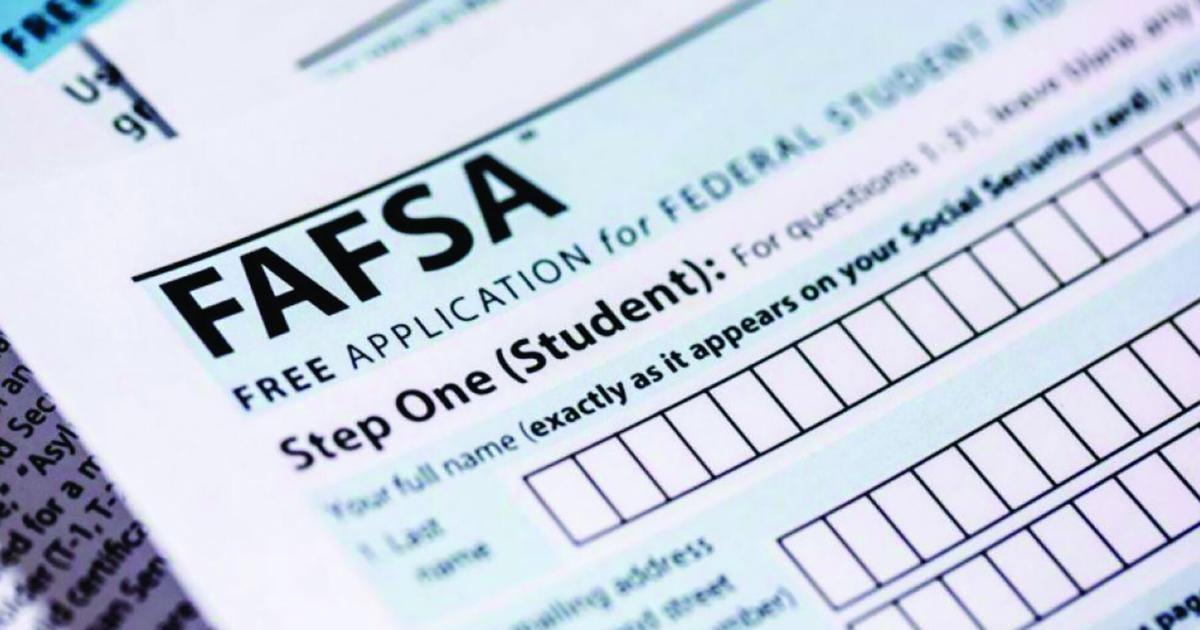
The Arizona Board of Regents’ new College Ready AZ FAFSA Scholarship aims to drive up high school seniors’ completion rate of a key to higher education financial assistance.
Through a partnership with Arizona Community Foundation, Helios Education Foundation, and the Valley of the Sun United Way, 25 Arizona high school seniors will be awarded a one-time scholarship of $2,000.
All that is required for students to qualify is that they plan to attend one of Arizona’s public universities or community colleges immediately after graduation, complete a 2026-27 Free Application for Federal Student Aid (FAFSA), submit a scholarship application through College Ready AZ, and respond to a short essay prompt provided by the Arizona Community Foundation.
The essay prompt asks students to explain how receiving the scholarship would support their personal and education journey, as well as how they hope to give back to their Arizona community through their education.
There will be numerous application windows from November through April and recipients will be announced monthly. In addition to the scholarship, winners will receive a personalized letter of congratulations.
Students can apply for the scholarship on the College Ready AZ website (collegereadyaz.com). Applications are open now and deadlines are at the end of each month today through April.
Applications are reviewed by a selection committee of three volunteers appointed by the Arizona Community Foundation. Scholarships are awarded based on the committee’s scoring of the essay.
Students not accepted during one application cycle will be rolled over to the next review period for consideration.
Dawn Gerundo, community development and engagement director for Valley of the Sun United Way, said the scholarship reflects a larger effort to make FAFSA completion more accessible statewide.
“Completing the FAFSA is one of the strongest predictors of whether a student will attend college,” Gerundo said. “At Valley of the Sun United Way, we know that education is a critical pathway to economic mobility and community well-being. Supporting FAFSA completion ensures students can access federal, state, and institutional aid—making college more affordable and attainable for all.”
Although the state met its completion goal for the 2025-26 cycle, as of Nov. 7, 45.2% of Arizona’s 2025 high school grads completed a FAFSA, according to data from the National College Attainment Network.
This cycle, the statewide FAFSA completion goal is 48% for the class of 2026, announced by Gov. Katie Hobbs at the Arizona Board of Regents FAFSA and College Readiness Symposium in September.
Arizona seems well-positioned to meet that goal, as current high school senior FAFSA completion is higher than this time last year. As of Nov. 17, data show, 20.23% of current Arizona high school seniors have completed the FAFSA – a 4% year-over-year increase.
“FAFSA is … really a form that unlocks opportunities to pay for college,” said Julie Sainz, director of FAFSA and college access initiatives at the Arizona Board of Regents.
“The FAFSA is really where students should start to see what they’re eligible for in terms of federal aid.”
Sainz noted, “There’re a lot of myths about FAFSA that we really try to debunk. If a family thinks that they make too much money or that they’re not going to qualify, I still encourage students and families to complete the FAFSA because there’re so many other types of federal aid that they could be eligible for, and things such as scholarships as well.”
Completing the FAFSA form gives students access to a robust amount of financial aid opportunities, which can be invaluable to low-income students.
Federal Pell Grants, based on financial need, are designed specifically for students pursuing their first undergraduate degree or credential. Best of all, they don’t need to be repaid.
Eligibility for work-study, a federal program that provides part-time jobs to students with financial need, is also determined by FAFSA data.
Moreover, many states and colleges use FAFSA information to determine eligibility for state and school aid. Some financial aid providers may also use FAFSA information to determine whether an applicant qualifies for their aid.
FAFSA also must be completed to borrow federal student loans. Federal loans are often preferred for their lower fixed interest rates, income-driven repayment options, loan forgiveness programs, and not requiring a credit check for most undergraduate borrowers.
Gerundo echoed Sainz’s point about FAFSA discouragement and myths.
“Many families believe FAFSA is only for those with financial need or worry it will affect taxes,” Gerundo said. “We want them to know FAFSA is for everyone—it opens doors to merit-based aid, grants, and scholarships.
“Completing it early maximizes opportunities and reduces stress later in the process.”
FAFSA completion is linked to increased likelihood of postsecondary education enrollment, according to National Center for Education Statistics (NCES) research.
Overall, students who complete the FAFSA are 84% more likely to enroll in postsecondary education immediately after high school. For students from low-income backgrounds, it’s linked to a 127% increase in immediate college enrollment.
Arizona consistently ranks among the top 10 nationally for year-over-year growth of FAFSA completion. For the 2025-26 cycle – which is open until June 30, 2026 – Arizona currently ranks ninth, according to the National College Attainment Network’s FAFSA Tracker.
This is an important year for the free applications, as it marks the rollout of a new and improved form following the previous two rocky cycles.
The new FAFSA form is a streamlined process, utilizing instant verification with the Social Security Administration and a simplified parent email invitation process. Students have been able to complete the form in as little as 15 to 30 minutes, Sainz said.
The scholarship is not the only initiative the board is leading to boost FAFSA completion.
The 50 by Fall campaign offers financial incentives to Title I and public high schools that achieve a 50% FAFSA completion rate amongst their senior class by Dec. 31.
A new partnership with the Valley Suns, the official NBA G League affiliate of the Phoenix Suns, offers students that complete the FAFSA up to four free tickets to a Valley Suns regular-season game at Mullet Arena.
Additionally, the board expanded its FAFSA Peer Coach Program to include more than 225 student coaches across Maricopa and Pima counties, trained to help their peers navigate the FAFSA and college financial aid.
Sainz noted that although it is the first year of the scholarship program, there may have already been talk about building upon it.
“We want this to be something that is a true Arizona scholarship that future senior cohorts and families can participate in and have the opportunity to receive a scholarship,” Sainz said.
“So we hope that next year we will have an even larger funding pot to be able to offer a higher dollar amount and offer the scholarship to more students statewide, so that we can hopefully build upon this to increase our footprint and make an even bigger impact on more students and families.”
Never miss an issue. Sign up for free today.
Your browser is out of date and potentially vulnerable to security risks.
We recommend switching to one of the following browsers: